
Payment recoveredOutcome: We identified which pricing document took priority. The subcontractor recovered the cost of all eight detours, including the two beyond its tender allowance.
Act and time limits
Recovery turned on the priority of the schedule of rates. For a statutory claim, select the location of your project.
Queensland
Building Industry Fairness (Security of Payment) Act 2017 (Qld) · ss 76 and 79(2)(b)
- Lower scheduled amount. Apply within 30 business days after receiving the payment schedule.
- Scheduled amount unpaid. Apply within 20 business days after the payment due date.
- No schedule and the claim was not paid in full. Apply within 30 business days after the later of the payment due date and the last day for giving a schedule. The schedule period is 15 business days after the respondent receives the claim, or the shorter period in the contract.
New South Wales
Building and Construction Industry Security of Payment Act 1999 (NSW) · s 17(2), (3)(c)–(e)
- Lower scheduled amount. Apply within 10 business days after receiving the payment schedule.
- Scheduled amount unpaid. Apply within 20 business days after the payment due date.
- No schedule and the claim was not paid in full. Serve the notice of intention to apply within 20 business days after the payment due date. Allow 5 business days after the respondent receives the notice to provide a schedule, then apply within 10 business days after that period ends.
Victoria
Building and Construction Industry Security of Payment Act 2002 (Vic) · s 18(2), (3)(c)–(e)
- Lower scheduled amount. Apply within 10 business days after receiving the payment schedule.
- Scheduled amount unpaid. Apply within 10 business days after the payment due date.
- No schedule and the claim was not paid in full. Give the notice of intention within 10 business days after the payment due date. Allow 5 business days from receipt for a schedule, then lodge within 5 business days after that period ends.
- These periods are for payment claims under the amended scheme from 15 April 2026. Earlier claims can fall under the transitional rules.
Western Australia
Building and Construction Industry (Security of Payment) Act 2021 (WA) · s 28(1)–(4)
- Contracts entered into on or after 1 August 2022. Apply within 20 business days after first becoming entitled to apply. A schedule for less than the amount claimed and failure to pay by the due date are distinct triggers.
- No schedule and payment is overdue. Give written notice of intention within 20 business days after the payment due date. Allow 5 business days from receipt for a schedule before using the no-schedule route.
- For contracts entered into before 1 August 2022, the Construction Contracts (Former Provisions) Act 2004 (WA), s 26(1), ordinarily requires an application within 90 business days after the payment dispute arises.
Northern Territory
Construction Contracts (Security of Payments) Act 2004 (NT) · ss 8, 10A and 28(1), (3)
- For a payment dispute under Part 3, prepare and serve the application on the other contracting parties and the appropriate adjudicator or prescribed appointer within 65 working days after the dispute arises. The count starts the next day.
- Identify the dispute under s 8 from the claim, the contract and the payment or rejection record. A qualifying high-value contract may provide a different adjudication process under s 10A.
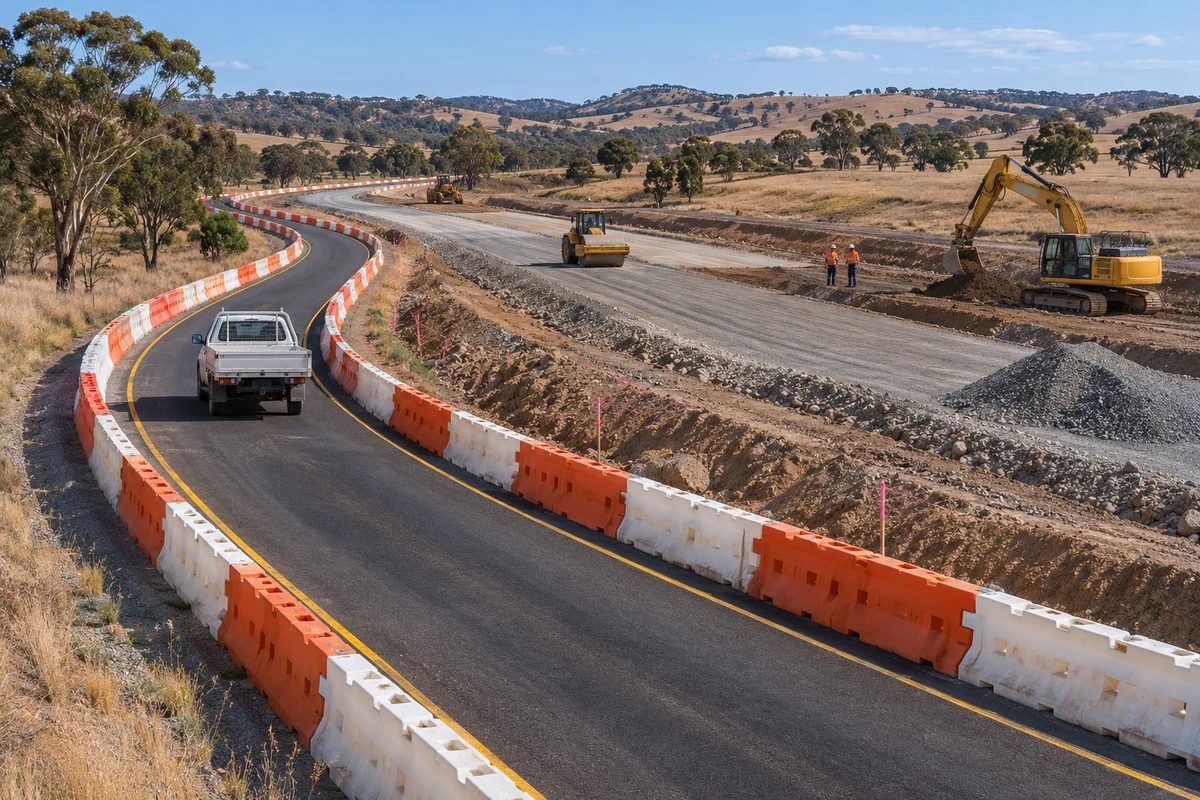
A highway subcontractor priced six detours, but the project required eight. The pricing schedule treated detours as remeasurable, while the standard conditions described temporary works as lump sum.
The competing documents
We checked the order of precedence in the contract. The schedule of rates took priority over the standard conditions. The schedule retained the wording that made the detours remeasurable.
The approach
We based the payment claim on the higher-ranking document and its valuation provisions. That addressed the central dispute: whether the additional detours were already absorbed in a lump sum or were to be measured and paid.
The result
The subcontractor recovered the cost of all eight detours.
Applying the preparation method
We collect the complete executed contract, including schedules, amendments, scope documents and incorporated drawings. We read competing provisions alongside the order-of-precedence clause. The payment submission should identify the precise inconsistency before explaining how the contractual hierarchy resolves it.
We connect entitlement to valuation by identifying the relevant items in the rates schedule and the project records establishing the quantities. The reviewer should be able to move directly from the contractual pricing basis to the measured work and then to the amount claimed.
Explore related experience
Put the evidence to work.
Tell us about the project, the disputed amount and any approaching deadline.
Discuss your claim →