
Payment recoveredOutcome: We found the subcontractor’s notice from the day the pipe was discovered. The subcontractor received payment for the disputed variation.
Act and time limits
The contract required notice within seven days. The subcontractor emailed on the day it found the pipe. For a statutory claim on your project, select its location below.
Queensland
Building Industry Fairness (Security of Payment) Act 2017 (Qld) · ss 76 and 79(2)(b)
- Lower scheduled amount. Apply within 30 business days after receiving the payment schedule.
- Scheduled amount unpaid. Apply within 20 business days after the payment due date.
- No schedule and the claim was not paid in full. Apply within 30 business days after the later of the payment due date and the last day for giving a schedule. The schedule period is 15 business days after the respondent receives the claim, or the shorter period in the contract.
New South Wales
Building and Construction Industry Security of Payment Act 1999 (NSW) · s 17(2), (3)(c)–(e)
- Lower scheduled amount. Apply within 10 business days after receiving the payment schedule.
- Scheduled amount unpaid. Apply within 20 business days after the payment due date.
- No schedule and the claim was not paid in full. Serve the notice of intention to apply within 20 business days after the payment due date. Allow 5 business days after the respondent receives the notice to provide a schedule, then apply within 10 business days after that period ends.
Victoria
Building and Construction Industry Security of Payment Act 2002 (Vic) · s 18(2), (3)(c)–(e)
- Lower scheduled amount. Apply within 10 business days after receiving the payment schedule.
- Scheduled amount unpaid. Apply within 10 business days after the payment due date.
- No schedule and the claim was not paid in full. Give the notice of intention within 10 business days after the payment due date. Allow 5 business days from receipt for a schedule, then lodge within 5 business days after that period ends.
- These periods are for payment claims under the amended scheme from 15 April 2026. Earlier claims can fall under the transitional rules.
Western Australia
Building and Construction Industry (Security of Payment) Act 2021 (WA) · s 28(1)–(4)
- Contracts entered into on or after 1 August 2022. Apply within 20 business days after first becoming entitled to apply. A schedule for less than the amount claimed and failure to pay by the due date are distinct triggers.
- No schedule and payment is overdue. Give written notice of intention within 20 business days after the payment due date. Allow 5 business days from receipt for a schedule before using the no-schedule route.
- For contracts entered into before 1 August 2022, the Construction Contracts (Former Provisions) Act 2004 (WA), s 26(1), ordinarily requires an application within 90 business days after the payment dispute arises.
Northern Territory
Construction Contracts (Security of Payments) Act 2004 (NT) · ss 8, 10A and 28(1), (3)
- For a payment dispute under Part 3, prepare and serve the application on the other contracting parties and the appropriate adjudicator or prescribed appointer within 65 working days after the dispute arises. The count starts the next day.
- Identify the dispute under s 8 from the claim, the contract and the payment or rejection record. A qualifying high-value contract may provide a different adjudication process under s 10A.
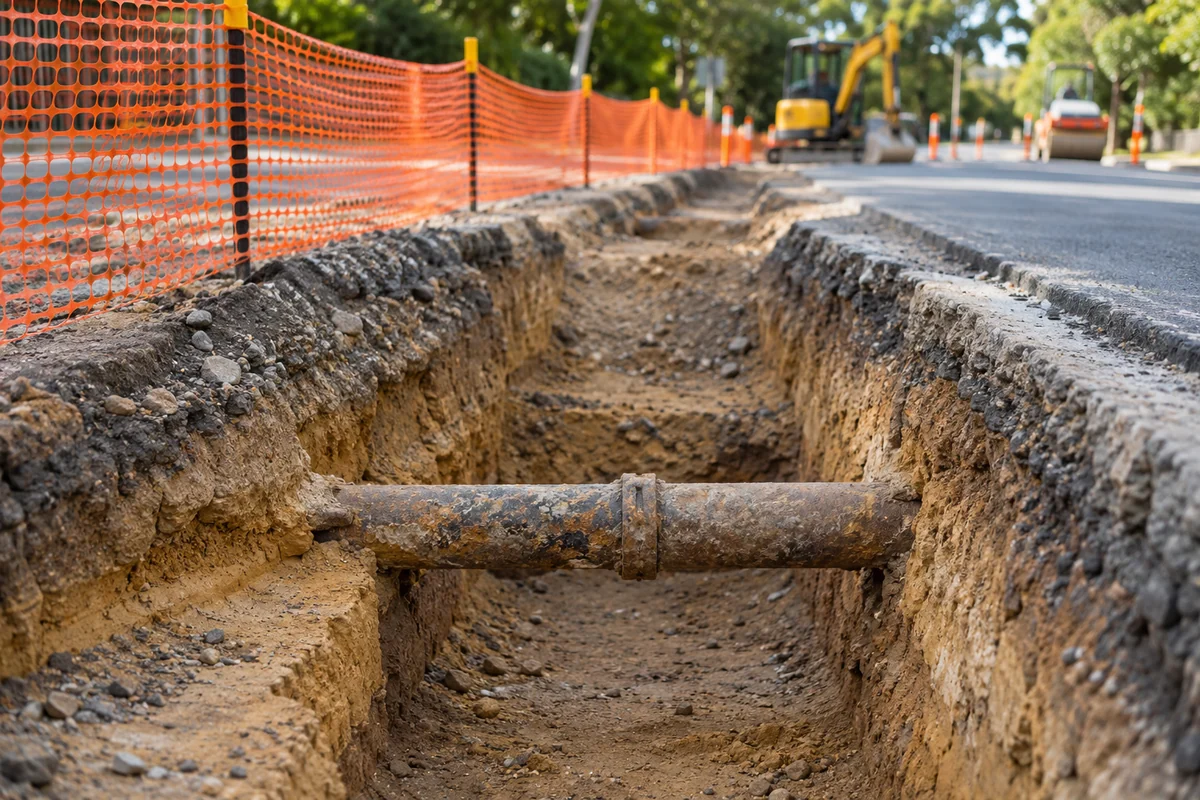
A roadworks subcontractor encountered an unforeseen pipe. The head contractor rejected the variation on the basis that notification had taken more than a month, while the contract required a notice within seven days.
The record that changed the discussion
We found the subcontractor’s notification email, sent on the day the pipe was discovered. The subsequent chronology showed approximately three weeks spent identifying the utility owner, followed by four days investigating whether the pipe could remain encased or needed relocation.
How the claim was presented
We connected the initial notice with the investigation needed to establish the consequences. We distinguished the date the condition was reported from the date its time and cost effects could be explained.
The result
The variation was paid.
Applying the preparation method
When a notice dispute arises, we build the chronology from the original records. We start with the first report of the condition, add the requests for information, responses and technical investigations, then link the resulting scope to its calculation. This gives the reviewer a coherent account of what was known at each stage.
We deal with notice and valuation separately. A dated email addresses what was communicated; the measurements, labour records, plant records and applicable rates explain the money. Both should be easy to find in the evidence file.
Explore related experience
Put the evidence to work.
Tell us about the project, the disputed amount and any approaching deadline.
Discuss your claim →